My divorce became final on a quiet autumn morning.
There were no photographers at the courthouse and no dramatic confrontation on the steps.
The agreement resolved our personal property and marital issues through the appropriate legal process.
The criminal and corporate cases remained distinct.
I kept the personal things that mattered to me and let go of objects that had become symbols of arguments I no longer wanted to repeat.
I moved into a smaller house with tall windows and a garden I could care for myself.
I did not become fearless after leaving Preston.
There were mornings when a sudden noise made me turn toward the door.
Sometimes I hesitated before trusting a new person.
The first night I slept there, I placed the old digital clock on my bedside table.
It had once been an instrument of evidence.
Now it was simply a clock.
I removed the camera component, confirmed the evidentiary copy had been properly preserved, and donated the ordinary clock mechanism to a repair shop that reused parts.
I did not want to build my new home around surveillance.
I wanted to build it around trust that had earned its place.
There were mornings when a sudden noise made me turn toward the door.
Sometimes I hesitated before trusting a new person.
Healing did not move in a straight line, and I refused to punish myself for that.
Aunt Ruth helped me unpack books.
Grace brought dinner.
Naomi sent flowers with a card that said only, “Welcome home.”
For the first time in seven years, nobody criticized where I put the furniture.
Nobody questioned why I worked late or laughed with friends.
Nobody used the word family as a reason I should surrender my judgment.
Sometimes I hesitated before trusting a new person.
I returned to the new garden in my thoughts because it revealed something I had initially missed.
There was comfort in admitting what I did not know, because it allowed investigators, auditors, and attorneys to do the work they were qualified to do.
I wanted the company to be able to explain its decisions to someone who did not already know or like me.
I left the question where it belonged, with the records and the people responsible for examining them.
Healing did not move in a straight line, and I refused to punish myself for that.
I worked with a counselor to understand why I had ignored so many small warnings.
One afternoon, I received a final letter from Lorraine through legal counsel.
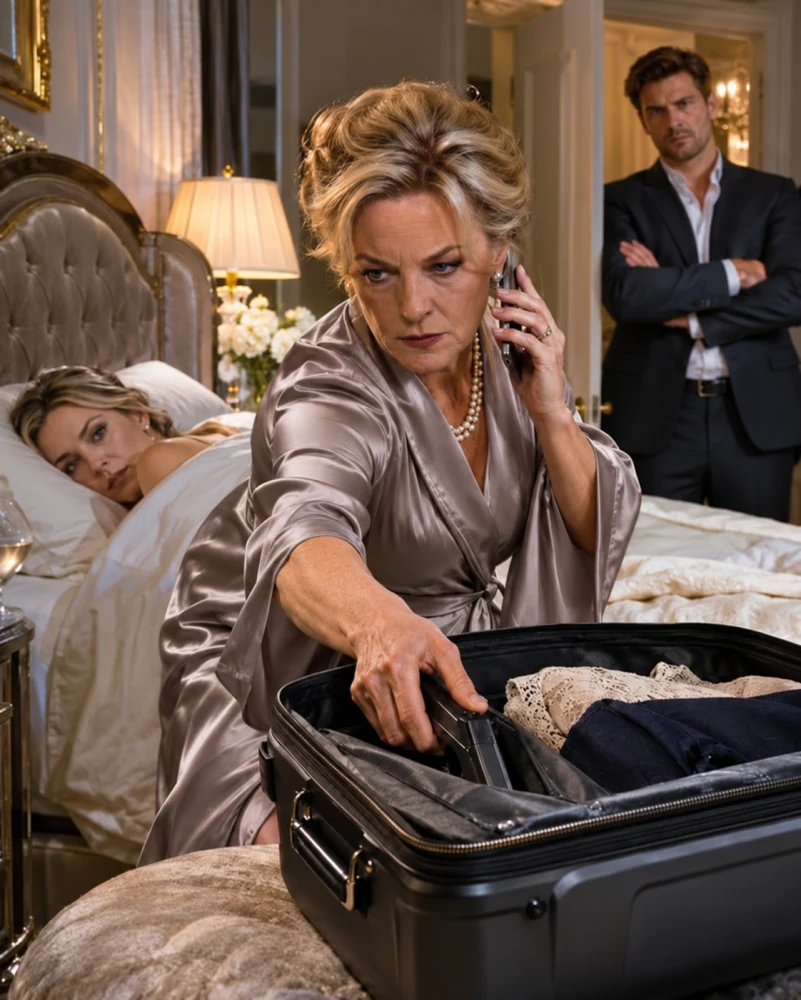
She expressed regret for the consequences of her choices and acknowledged that entering my room and placing the gun in my luggage had been wrong.
I read the letter in silence.
Then I placed it in a file with the other case documents.
I gave no answer immediately.
I had once confused forgiveness with allowing another person back into my life.
Healing did not move in a straight line, and I refused to punish myself for that.
I worked with a counselor to understand why I had ignored so many small warnings.
What stayed with me about the divorce paperwork was not the spectacle but the ordinary decision beneath it.
For years, I had believed being patient meant letting the same question remain unanswered until everyone else felt comfortable.
I had learned that the cleanest form of strength was often an unglamorous willingness to follow the evidence.
It was a small act of self-respect, almost invisible from the outside, and precisely the kind I had neglected for years.
The conversations were not about blaming myself for someone else's actions.
Now I understood that I could wish someone no further harm while keeping a boundary that protected me.
Preston sent no letter.
Perhaps he had nothing he was ready to say.
I no longer measured my healing by his recognition of what he had done.
On the anniversary of my father's death, I visited the first Lawson hotel.
Looking back at the scholarship event, I could identify the exact moment I stopped accepting appearances as answers.
The trouble with an unanswered question is that it can become a habit, and habits can make a person mistake uncertainty for peace.
I could not control what Preston said, what Lorraine believed, or how strangers interpreted a photograph.
For once, I did not confuse a quiet response with surrender.
A framed photograph of him hung beside the reception desk.
I worked with a counselor to understand why I had ignored so many small warnings.
The conversations were not about blaming myself for someone else's actions.
They were about recognizing what I wanted from future relationships and learning to state my limits early.
The staff had gathered for a small scholarship announcement honoring employees pursuing further education.
The program was funded through an independently administered charitable initiative and approved company contributions.
I spoke briefly about my father's belief that opportunity should grow when people worked together honestly.
I did not mention Preston or Lorraine.
The day belonged to employees and to a man whose faith in people had outlasted his life.
Afterward, I walked alone through the lobby.
The conversations were not about blaming myself for someone else's actions.
They were about recognizing what I wanted from future relationships and learning to state my limits early.
I began inviting friends to dinner again.
The polished floor reflected the afternoon sun.
A family rolled suitcases toward the elevator.
A receptionist helped an elderly guest find a comfortable chair.
Everything looked ordinary.
And ordinary suddenly felt beautiful.
When I reached the front doors, I remembered that dreadful midnight whisper.
They were about recognizing what I wanted from future relationships and learning to state my limits early.
I began inviting friends to dinner again.
Some nights we talked about work; other nights we argued playfully about movies.
“By breakfast, she'll be finished.”
They had been wrong.
By breakfast, I had begun.
I began inviting friends to dinner again.
Some nights we talked about work; other nights we argued playfully about movies.
I learned to enjoy a conversation that did not end with me apologizing for having an opinion.
I planted herbs outside the kitchen window and burned my first attempt at homemade bread.
Ruth laughed and told me my father had been just as bad at baking.
For the first time, I could tell stories about him without immediately thinking about the company he left behind.
He was my father before he was a founder.
I was his daughter before I was a shareholder.
That order mattered.